
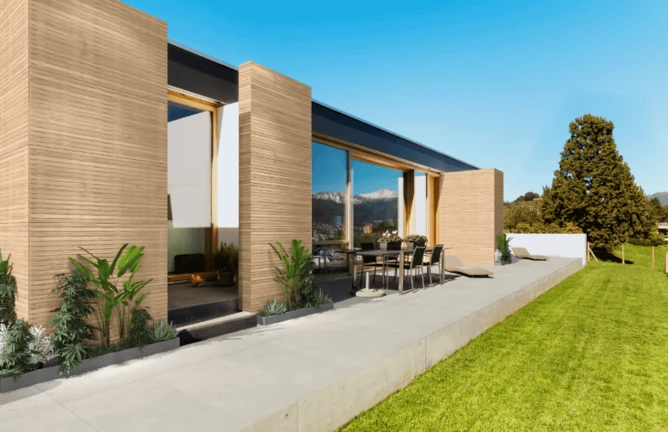
The first moment of the day often begins with a small gesture: slightly opening the door, stepping outside, letting fresh air in. This simple transition instantly changes the perception of space. The pace of the interior softens, and the day gains a more balanced rhythm. In recent years, one of the most significant transformations in residential design has been the repositioning of outdoor spaces at the center. Balconies, terraces, and gardens are no longer considered merely architectural additions; they are designed as essential components of the living experience.
Redrawing the Boundaries of Space
The home has evolved into a multi-layered living environment that accommodates most of the day. Work, rest, socializing, and solitude are all resolved within the same square meters. This intensity makes the boundaries of space more visible.
At this point, outdoor space comes into play. It provides mental relief as much as physical expansion. The balance established between the density of the interior and the flow of the open air directly affects the quality of life.
Balcony: The Most Flexible Area of Daily Life
The balcony is one of the fastest-transforming areas in today’s residential understanding. Its structure, not tied to a single function, allows it to adapt to different roles throughout the day.
In the morning, it becomes a brief focus area; at midday, a breathing point; in the afternoon, a social meeting space… The same area offers different experiences at different times of the day.
The factors that shape this experience are not limited to square meters alone. Elements such as light, orientation, privacy, and view are the main layers defining the quality of a balcony. In modern architecture, the balcony stands out as one of the spaces undergoing the fastest transformation. Thanks to its flexible nature, it can assume different identities throughout the day.
Terraces and Gardens: The Expanding Layer of Living
Terraces and rooftop gardens elevate the residential experience to a higher level. These spaces are not designed merely as open-air surfaces; they transform into stages that reorganize the rhythm of life.
Maintaining a connection with the city while establishing a calmer rhythm, staying in touch with the outdoors, and experiencing different moments of the day within a single space are among the primary advantages these areas offer.
Strong examples of this approach can be seen in new-generation developments located at the higher elevations of Göktürk. Wide terraces and rooftop gardens are designed together with architecture that maximizes daylight. In this way, outdoor space becomes a natural extension of living, creating a seamless relationship between interior and exterior.
Koray Upland: An Approach That Places Outdoor Space at the Center of Design
This new role of outdoor space is treated as the main starting point of design in certain projects. Koray Upland is one of the strong examples of this approach.
Located at one of the highest points of Göktürk on an area exceeding 20,000 m², the project considers open space not merely as an addition but as a core component of living. Its proximity to Belgrad Forest and closeness to Göktürk Pond make the outdoor experience a natural part of daily life.
The wide terraces, rooftop gardens, and balconies within the project offer a layout that facilitates connection with nature. Especially the private rooftop gardens and large terraces provide users with a different spatial experience while remaining within the city. Here, outdoor space is not only a viewing point but an active living area accompanying different moments of the day.
Connection with Nature: A Part of Daily Life
At the core of the renewed value of outdoor space lies the strengthening of the relationship with nature. This relationship stands out not only as an aesthetic preference but as a factor that determines quality of life.
Koray Upland’s proximity to Belgrad Forest brings this connection into everyday life. Forest walks, outdoor activities, and interaction with the natural environment transform the residential experience into a structure that is not limited to indoor space.
View: The Perceptual Value of Space
The strength of outdoor space does not come solely from its physical size. Viewing angle and perspective deepen spatial perception.
At Koray Upland, the position overlooking the panoramic Göktürk view is an important element that strengthens this perception. When combined with large windows and open areas, the boundary between interior and exterior gradually becomes thinner. This defines the living experience not only through square meters but through perceptual spaciousness.
A New Residential Criterion
Residential preferences are no longer limited to room count and square meters. The experience offered by outdoor space has become an important part of the decision-making process.
● Variety of open-space usage
● Relationship with daylight
● Contact with nature
● Flow between spaces
These criteria are among the elements that directly affect quality of life.
Outdoor Space as the Main Layer of Living
Balconies, terraces, and gardens stand out not as areas outside the residence but as layers positioned at the center of living.
In projects like Koray Upland, this approach forms the basis of architectural decisions. Placing open space at the center of design transforms the residence from merely a place to live into an experiential living environment.